

Creating a Jira Issue Template is a straightforward process with the Easy Issue Templates for Jira app. This guide provides detailed instructions for Jira Cloud and Data Center users on how to create templates from scratch with the Templates Constructor, import existing Jira issues as templates, save open issues as templates, set the template scope, and incorporate various fields.
Instructions
🛠️ Part 1: Building a Template from Scratch with Templates Constructor
The Templates Constructor lets you create a new template without starting from an existing Jira issue. Use it when you want to design the issue structure, fields, variables, and scope directly from the template creation flow.
-
Open the template creation page:
-
Click “Create Template” from one of the available entry points, such as the Manage Templates screen, the Get Started page, or a zero-state template popup.

-
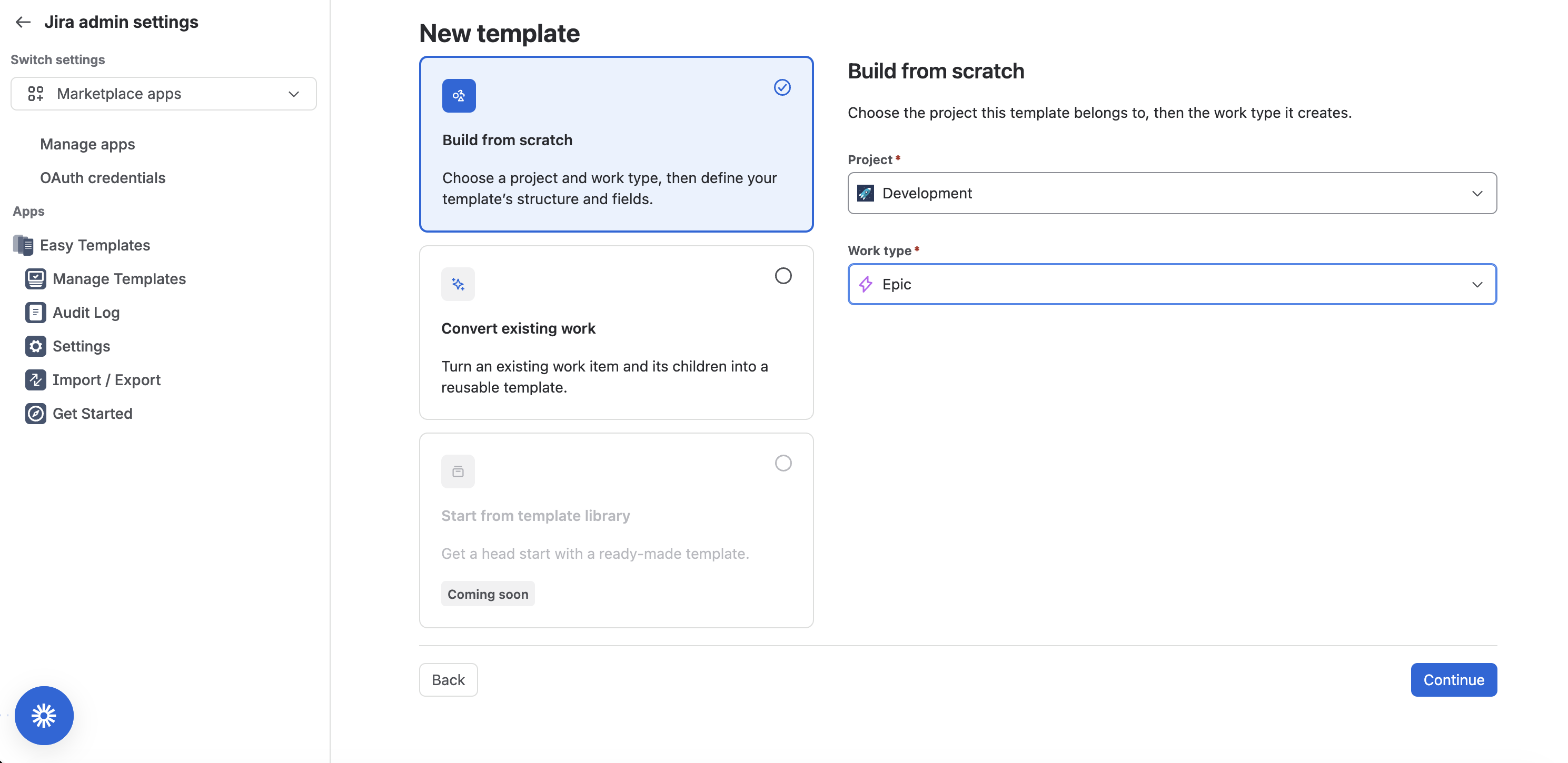
The app opens a creation page where you can choose how to create the template.
-
-
Choose Build from Scratch:
-
Select “Build from Scratch”.
-
Choose the source project and issue type that should define the available fields and work item configuration.
-
Click “Continue”.
-
-
Configure the template details and structure:
-
Enter the template name and define the issue summary and description.
-
Add issues, work items, or sub-tasks to build the template structure.
-
Configure forms and variables if the template should collect dynamic input from users.
-
Set the usage scope to control where the template will be available.
-
Add system or custom fields and define the values that should be applied when the template is used.
-
-
Create the template:
-
Review the configured structure, fields, variables, and scope.
-
Click “Create template” to save the new template.
-
-
Choose what to do next:
-
After the template is created, choose whether to manage templates, add more templates, or edit the template you just created.
-
➡️ Part 2: Creating a Template by Importing Jira Issue
-
Find the Create Template Button:
-
The “Create template” button is available in various locations including:
-
Manage Templates screen.
-
Create from template popup (zero-state).
-
Apply issue popup (zero-state).
-
Get Started page.
-
-
-
Create the Template:
-
Click “Create Template” in any of the above locations.

Manage Templates list -
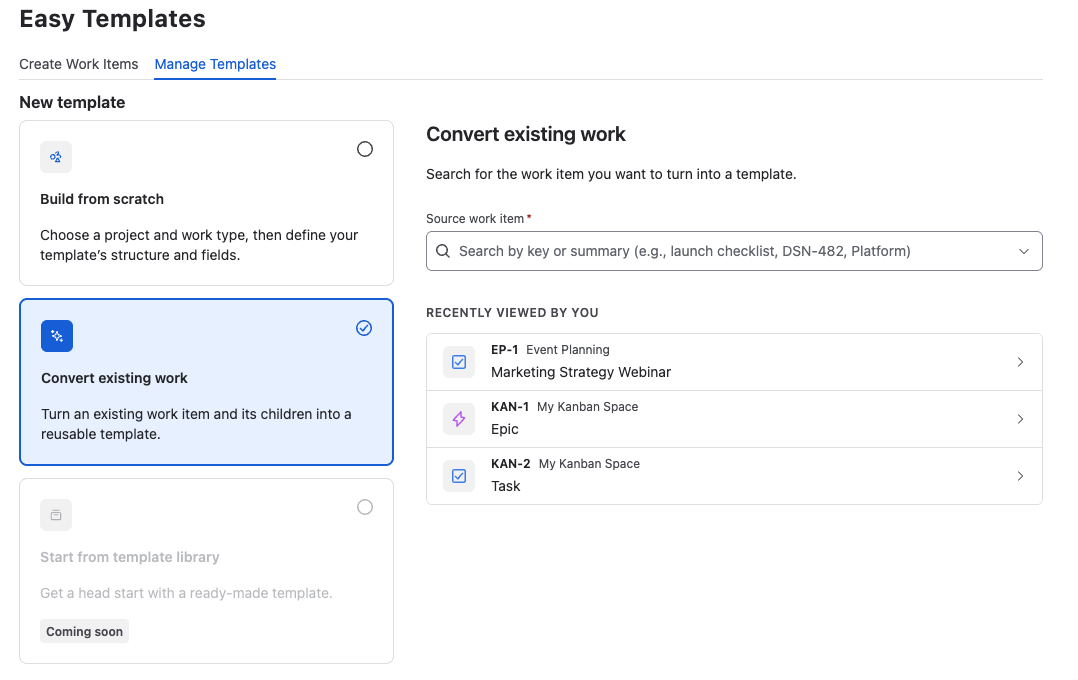
Select a Jira issue as the source for your template.
-
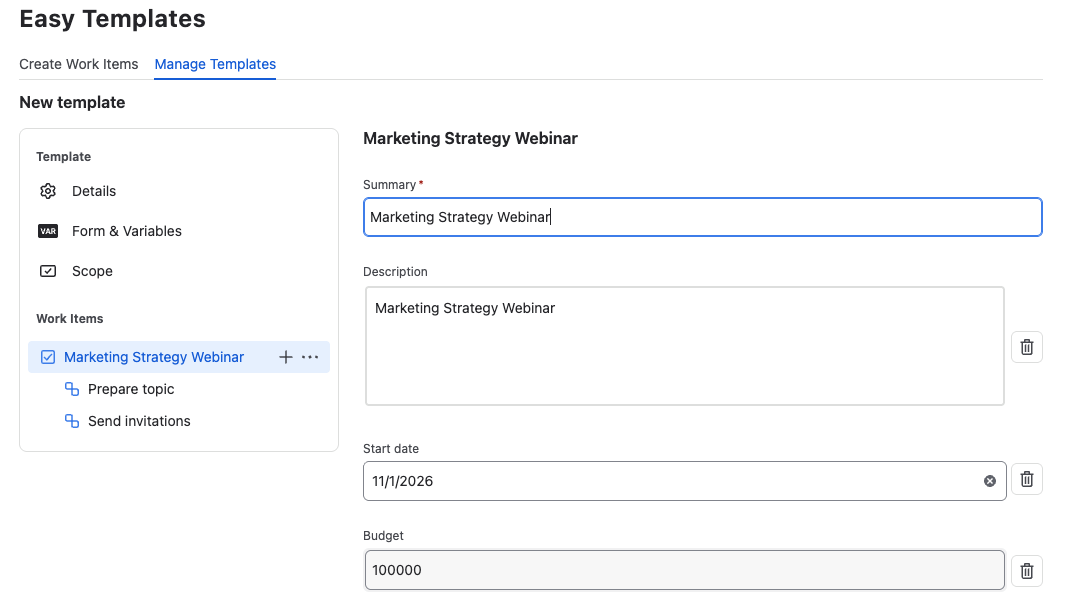
Set a name for your template, check details, and actualize content
-
Click “Create” to finalize the new template creation. 🎉
-
📩 Part 3: Saving a Template from Jira Issue
You can also create a template directly from an existing Jira issue. Use this method when an issue already contains the summary, description, and sub-tasks you want to reuse.
-
Start with an Existing Issue:
-
Ensure you have a Jira issue already created, as this will form the basis of your new template.
-
-
Access the Save Template Feature:
-
Navigate to your selected Jira issue.
-
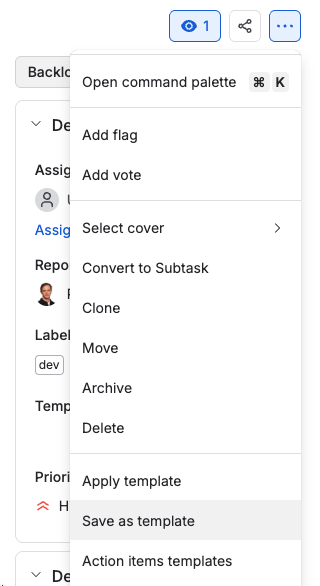
Open the top-right menu by clicking on the "•••" (More) icon.
-
Select “Save Template” from the dropdown menu.
-
-
Configure the Template:
-
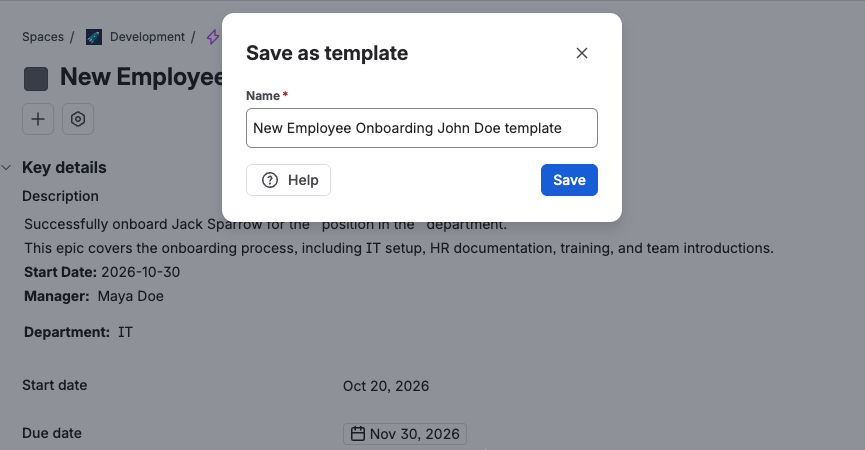
Set the template name in the prompted field.
-
Click "Create" to save the template.
-
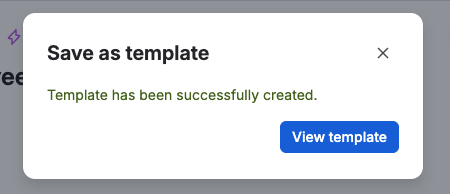
Then you can adapt the template by clicking “View template”. This new template includes the issue's summary, description, and any subtasks, along with their summaries and descriptions.
-
Understanding Template Scope
The created templates will have a broad scope, capturing essential elements of the issue. For more detailed control over which fields are included or excluded in your template, refer to
-
Managing Template Fields Configure Template fields
-
Setting Template ScopeSet Template scope
Check Video
https://www.youtube.com/watch?v=AaCNAomU2fw
Conclusion
By following these steps, you can efficiently create Jira Issue Templates in Jira with Easy Templates app, enhancing your project management and workflow automation. These templates can save time and ensure consistency across similar tasks and issues.
Additional Resources
-
Enabling Template Fields: Learn how to define what template fields should be used during new issue creation and what should be ignored.
-
Support Material: Check out the instructional video on creating templates.
By utilizing these features, you can tailor your Jira environment to better suit your project management needs, ensuring a more streamlined and efficient workflow.
For any questions or feature requests contact us via Customer Portal